
MetPro Success Story: Thriving with a Demanding Career and Travel
In this MetPro client success story, we hear from Allison Lee, a busy professional who juggles a demanding career in corporate event management with her passion for running marathons. Allison shares her journey with MetPro, from initial skepticism to long-term success in managing her weight, improving her running performance, and maintaining a healthy lifestyle while constantly on the go.
Personalized Nutrition for Running Performance: A Marathoner’s Story
Crystal: Well, let’s start with a little bit of background. Everyone has different reasons for starting any kind of journey with MetPro. Tell me a little bit about yourself and how you came to MetPro.
Allison: Yeah, for sure. I’m 51 years old, I identify as female, and I’ve been a runner almost my entire life. I started running as a child because I had asthma, and the doctor said I needed to run to strengthen my lungs. Running became a big part of who I am. My mother was a runner, so I started running, ran cross country in high school, and even though I wasn’t particularly talented, I liked to run. I’ve kept it up, and in 2001, I ran my first marathon, and a light went off. I’ve now run 40 marathons and am trying for the 50-state club. Running has been a big part of maintaining my physical health.
Weight Loss for Women Runners in Their 40s and 50s
As I got into my mid-to-late 40s, it became harder. I’m 51 now, and what used to be easy—like losing five pounds—became difficult. I also noticed I was slowing down in my running. In my younger 40s, I was getting faster, but that changed as I got older. I was having trouble keeping the weight off.
I was listening to another podcast called Marathon Training Academy, where Trevor and Angie talked about MetPro. They started talking about it around Thanksgiving, and I remember Trevor saying, “Hey, we found this thing, it’s MetPro, and Angie and I are going to try it out. It’s a little spendy, but if you want to look at it, check it out.” I went right to the website and took a look. It wasn’t until late spring of 2018 that I reached out for the free consultation through the Marathon Training Academy link and ended up signing up.
My initial thought was to try it for three months and see what happens. I didn’t admit to myself that I was interested in weight loss. What I said was that I wanted to improve my running and feel better. But in the back of my mind, I was really hoping to lose some weight too.
I got hooked up with coach Jesse right away, and I’m still with her. Those first few weeks were rough, especially that initial drop. If you remember those first three days, you suddenly realize your relationship with food is never going to be the same again. I was hungry a lot at first, and everything I put into my mouth was no longer just an idle thing; I had to consider it.
“As I got into my mid-to-late 40s, it became harder. I’m 51 now, and what used to be easy—like losing five pounds—became difficult. I also noticed I was slowing down in my running. In my younger 40s, I was getting faster, but that changed as I got older. I was having trouble keeping the weight off.”

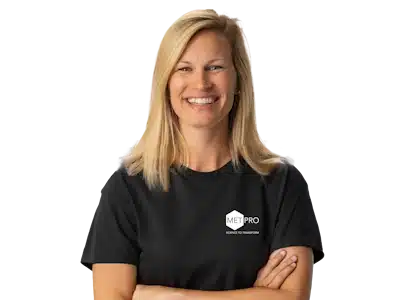
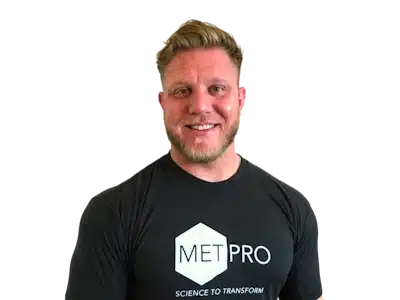

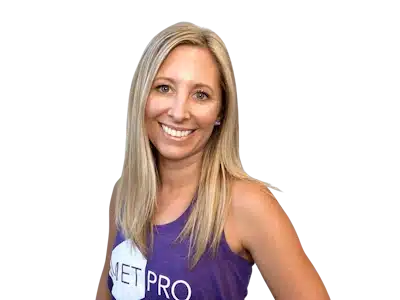


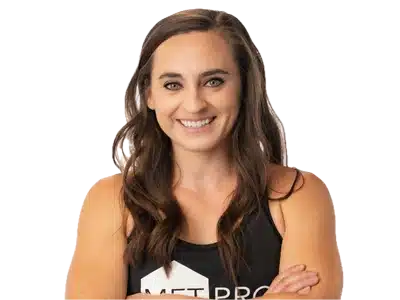
Coach Natalie
Registered Dietitian, MS in Nutrition, Board-Certified Specialist in Sports Dietetics (CSSD), NASM CPT, UESCA Running Coach

Accountability and Habit Formation for Lasting Weight Loss
I’m the kind of person who, if I’m going to do something, I’m going to do it. And wouldn’t you know it, I started to lose a little weight. Things settled, and my running started to feel better. Three months passed, and I meant to stop, but I wasn’t quite where I wanted to be yet. I didn’t even know where I wanted to be, and I don’t think I knew how to express that to Jesse at the time. Another three months passed, and after six months, it became a habit. Logging my food and workouts, running marathons—Jesse would adjust my intake depending on how things were going.
Then the pandemic came along. I’m a stage manager with 30 years of experience, traditionally in theater, where the stage manager calls all the cues, makes the lights happen, the sounds happen, the sets move. For the last 11 years, I’ve done corporate event stage managing, which requires me to travel.
Pre-pandemic, I was on the road over 200 days a year. But when the pandemic hit, I was suddenly home for 18 months. That’s when I really felt in control of my MetPro journey. I was cooking three meals a day for myself and my father, who I live with. I love to cook, and I was able to exercise as long as I wanted every morning since I didn’t have work. My running improved even though I didn’t have a race to train for, and I did long runs every weekend just because I could.
By the time I went back to work in late 2021, I felt like my running had improved, and I was definitely in a flow with Jesse. I don’t tend to lose a lot of weight, but I felt like this is just me. I didn’t mean to be doing this three years later, but it was the only expense I kept up during the pandemic when my work decreased dramatically. Those weekly calls with Jesse were a normal thing in a world where things were not normal. It was one of the things I could control. I could control what I put into my mouth, what I logged in the app, and how much I worked out.
“Those weekly calls with Jesse were a normal thing in a world where things were not normal. It was one of the things I could control. I could control what I put into my mouth, what I logged in the app, and how much I worked out.”
Maintaining Healthy Habits When Traveling for Work
Now, I’m fully back to work, on the road even more than I was pre-pandemic. I’ve learned with Jesse that it’s not difficult to keep this up on the road. I eat a lot of salads because my meals are very regimented. If I don’t eat, I’m not going to get to eat, so I eat when it’s time and don’t eat in between, except for my snacks.
I don’t find that difficult in the work environment. At home, it’s a bit more challenging, especially around Christmas when I had to bake cookies because it’s tradition. Those cookies bring me comfort and joy, so of course, they’re in the house, and of course, I ate them. But that’s what you do at Christmas.
My current goal is to maintain my weight. If I lost five pounds, I wouldn’t complain. I want to continue running as I get into my fifties. I have 12 more marathons to go if I want to complete my 50 states. I understand now that my nutrition, physical activity, and mental health are all important as my body changes.
Crystal: How often, traditionally, not counting the pandemic, are you able to do marathons each year?
Allison: It really depends. In the early years, I thought I could only do one. Then I eventually did two, and someone said, “You’ve trained for one, you might as well do another one in six weeks.” In 2012, I did five because I met someone at Myrtle Beach, and then five weeks later, I did another. It also depends on my work. When I was working in traditional theater on the Broadway schedule, I couldn’t just take time off to run a marathon, so it depended on my schedule. Some years it’s one, some years it’s five.
Last year, I only did one because I had an almost year-long knee injury. I gained some weight, and everything was different. I did a marathon about eight weeks ago in Vegas. My hope is to do two or three a year, maybe five, but I don’t think that’s in the cards. Two or three a year is possible, depending on my work and life schedule.
Crystal: That’s exciting. It’s a big goal. I have a friend I know through Peloton, and her leaderboard name is Marathon Mom. She had a goal of hitting 50 marathons before she turned 50. It’s a very sad story—she was with this gentleman who is actually how I met her, and he passed away two weeks before she did her 50th marathon. She still did it, and I was so amazed by that. Seeing people achieve something like that is inspiring.
Allison: It takes on a different meaning. You start because it’ll be fun to do 50 states, but life comes at you. Marathons become a way to recover from something, memorialize something, or celebrate something. It’s weaved into the thread of how you approach life. Marathoning can do that. I definitely didn’t want weight gain and body changes to impact that because I could feel it trying to.
Crystal: You spend so much time on training. It’s very different from someone training to be fit. When it comes to training for an event like marathons, a half Ironman, or an Ironman, you spend so many hours a week on training that it’s almost like a recovery.
Allison: Yeah, it becomes slow. I used to be at five hours, and now I’m in the 5:30 to 5:45 range, so my training takes forever. You have to allot the time or get up earlier. That’s a lot of work.
“I’ve learned with Jesse that it’s not difficult to keep this up on the road. I eat a lot of salads because my meals are very regimented. If I don’t eat, I’m not going to get to eat, so I eat when it’s time and don’t eat in between, except for my snacks.”
MetPro Coaching is a Personalized Approach
Crystal: Since you went into this not knowing what to expect, what has it been like working with Jesse? Was it what you expected?
Allison: I don’t think I knew what to expect. I knew how Angie and Trevor talked about it. Angie had massive success and continues to, and Trevor was like, meh. They were honest about both approaches. I don’t think I knew what to expect. I needed more than just losing five pounds. I had lost some weight on my own by cutting out sweets, but I didn’t understand how carbs played a role. I didn’t know how fruit could be bad for me or how carbs in fruit could impact me.
My mother was a nurse practitioner, so we were always very healthy at home, but I have a sweet tooth. I didn’t expect the regiment of it. I was initially taken aback by the app and having to pick what food I could have to make up my macros and the perceived limitations of that.
I remember writing to Jesse a few times, asking, “What do you mean dried oatmeal?” It was a mind change. I had to change how I looked at food intake without getting obsessive about it. It was important to me that this didn’t become everything I am. Now, it’s such a habit to think about carbs, protein, and fat, even if I’m in a hotel and can’t measure or control it.
I’ve learned to work within the system. I probably don’t go button for button with the app anymore like I used to, but I didn’t realize the regiment of it initially. Now, five or six years later, it’s just a habit. When I go off it, I know it. I’ve found ways to work within the system.
Crystal: I’m curious, what keeps you coming back to MetPro after all this time? What draws you in?
Allison: There have been times when I’ve been out of the country for chunks of time and had to stop. I couldn’t weigh myself or be on the app. After a month, you do forget to weigh yourself every morning. Initially, the money concerned me, but I learned that the benefits of MetPro outweigh the cost for me. The benefits of being accountable to myself are higher than the expense.
Although Jesse and I speak each week and she texts me, I’m really accountable to myself. Having Jesse there, in the background or on the phone, is enough for me to be accountable to myself the rest of the time. That’s something I’ve had to learn. That’s also part of my personality. I’m pretty responsible to myself, or if I say I’m going to do something, I do it.
I’m not perfect. I’m never going to lose 30 pounds on MetPro. That’s not going to be me. My experience with MetPro is about feeling good in my body at the moment, in the conditions I’m in, whether I’m injured, working, or have a cookie in front of me. It’s about finding that balance.
I have considered letting MetPro go, but I think it’s built into the habit now to go into the app each day, keep track, and put in my exercise. I enjoy seeing the numbers and being accountable to getting on the scale every morning. It used to be a thing of dread, but now it just is. It’s part of my habit.
“The benefits of being accountable to myself are higher than the expense. Although Jesse and I speak each week and she texts me, I’m really accountable to myself. Having Jesse there, in the background or on the phone, is enough for me to be accountable to myself the rest of the time.”
Mindful Eating for Sustained Weight Loss and a Healthy Relationship with Food
Crystal: That makes sense. What about your family and friends? When you first started, did they have a lot of questions about the change you were making?
Allison: They might have, but I’m not sure anyone would have noticed. I did it very privately. I was alone that first summer when I started with Jesse. My father was away that summer, so it was probably perfect because I could get out the measuring cups and only eat for me. Now, I cook for both of us. That first summer, as I was adapting, was the perfect situation because I didn’t tell anyone. It didn’t actually occur to me to tell anyone because I don’t think it impacted how I related to my work and life, other than I didn’t get dessert at the buffet table at work.
When my father came back home, I don’t think he really noticed, but he is aware that I worked with a nutritionist. I’ve learned some things, and he doesn’t eat as much rice as he might want to put on the plate. On the nights he cooks, I’m like, “Dad, less rice, please.”
When we eat a meal together, I don’t cook two different meals. We eat the same meal, or if he’s cooking, I’ll eat what he makes. Those adjustments are on my end by not having a second helping or not having as much rice if I’m at a lower intake.
With my friends, no, I haven’t told a soul. Well, that’s not true. I’ve only told two people I know about MetPro. Initially, it was because of the cost. I thought, “Oh, Allison, that’s a big expense.” I just feel like my weight loss journey or body maintenance journey is a personal thing to me. I don’t need the support from others because I have Jesse and myself. I haven’t felt the need to share it. It’s interesting that I’ve been doing this for so long and have told so few people about it.
Crystal: It is. Especially when I think about the clients I’ve talked to, it seems like there’s such a wide variety of how people feel about it. Some people feel it’s private, but I always find it interesting that some people will be asked, “Why aren’t you having a drink tonight?” and they’re comfortable answering that question. They might tell the story behind MetPro or what they’re doing. Then there’s another group of people who don’t even want to be asked that question, so they go out of their way to hide it. I just think it’s interesting how it’s not normalized.
When someone hears about MetPro without truly understanding what it is, it sounds like a diet. To some people, there’s a stigma around needing help, asking for help, or spending so much money. But at the end of the day, you’re just taking care of yourself. No one thinks twice about a gym membership, but it’s fascinating that so many people feel uncomfortable talking about how they’re handling their food.
Allison: Yeah. It hadn’t occurred to me, and I’ve never been asked, “Why aren’t you having a cookie?” I don’t really drink, so that hasn’t been hard. My father has occasionally said, “Is that enough food?” That’s probably the one place where I’ve seen that, but it hasn’t changed how I interact with the world around me.
Crystal: That makes sense. It might just depend on how a person comes into MetPro and what kind of situation they’re in. Sometimes on the weekend, if you’re a person who goes and watches the game at a bar and usually has a few drinks, and suddenly you’re not doing that, it might be more noticeable. But for those of us who tend to eat at home and chill, it’s different.
Allison: Yeah, I have to eat out all the time when I’m at work, so when I’m home, I just want to be home.
Crystal: That makes sense. When you first started MetPro, was there anything you thought you would have to change significantly but ended up not being significant?
Allison: I knew I’d have to cut back on sugar. I made some changes, like never idly pouring a bowl of cereal for myself. I don’t eat cereal anymore either. For a little bit, I missed that. Life cereal, oatmeal squares—I don’t have them anymore. They’re in the house because my dad has them, but I don’t. I don’t idly snack or eat the way I might’ve before because I can’t.
Crystal: So it’s much more thoughtful now?
Allison: That’s a good word. Everything I put in my mouth is thoughtfully done. If I choose to have the cookie, it’s with thought. It’s an acknowledgment of it without going crazy. But I don’t idly snack or eat anymore.
“Everything I put in my mouth is thoughtfully done. If I choose to have the cookie, it’s with thought. It’s an acknowledgment of it without going crazy. But I don’t idly snack or eat anymore.”
Fueling a Busy Lifestyle: Nutrition Strategies for Corporate Travel
Crystal: That sums it up. You ended up making changes because you enjoyed the effects of those changes.
Allison: That’s what it is. Initially, it was stressful, and I texted Jesse about it. But as it became part of my day, it’s not so much effort anymore.
Crystal: Even when you travel? You said you travel a lot, so that’s easy for you to do too?
Allison: Yeah, Jesse and I are really specific about my travel schedules. She knows I’m about to be gone for three weeks, so we’re going to do a drop. I’ve been on a high intake because I ran a marathon before Christmas. I’ve been home for the last week, and now I’m hitting the road for three weeks. Living in hotels isn’t difficult. I carry my own breakfast with me—pre-measured oatmeal with protein powder and almonds is a good macro for me in the morning. I carry my snacks—RX bars, applesauce packets, raisins, turkey jerky, small bags of nuts. Lunch on the job site is always provided, and there’s always a salad at the buffet. I don’t find it hard because I have to eat and go back to work. Dinners at night are sometimes on my own, but hotels have pre-prepared salads. Gone are the days of a chicken sandwich and fries—I can get a grilled chicken sandwich without the bread and have a salad. I don’t find hotel living difficult because there are no temptations around. Sometimes I have a snack at night, but I have my snacks. Initially, I thought travel would be harder, but it’s turned out to be easier. I have trouble working out on the road because my schedule is crazy. My workouts become my Peloton classes in my hotel room instead of going for a run. My body loves running, so when I’m not running, it’s different. That’s something I have to consider when I travel.
Crystal: Definitely. All hotel treadmills are not created equally.
Allison: No, and I don’t mind a hotel treadmill, but they close at 8 p.m. and open at 5 a.m., and I’m at work by 5 a.m. and don’t get home until 9 or 10 p.m.
Crystal: So you have a really long day.
Allison: I have really intense work times when I’m on the road, and when I’m home, I have more flexibility.
“Living in hotels isn’t difficult. I carry my own breakfast with me—pre-measured oatmeal with protein powder and almonds is a good macro for me in the morning. I carry my snacks—RX bars, applesauce packets, raisins, turkey jerky, small bags of nuts.”
The Ultimate Takeaway: Your Journey, Your Responsibility, Your Results
Crystal: So what did we miss? What do you want to make sure people know about your journey that we haven’t covered?
Allison: I think the part we haven’t covered is that I’ve learned you can only be yourself, however that means for you. Your journey is your responsibility. Yes, there are influences, and things will get in the way, but your choices are yours. I know I feel best when I’m healthy, have energy, and feel light.
I feel amazing after a run, and before MetPro, I wasn’t having those things. My running was impacted. After MetPro, I know I can have that feeling again. That was important to me. MetPro helped me get all that back. It will always take some effort, but I know the results are worth it for me.
“I know I feel best when I’m healthy, have energy, and feel light. I feel amazing after a run, and before MetPro, I wasn’t having those things. My running was impacted. After MetPro, I know I can have that feeling again. That was important to me. MetPro helped me get all that back. It will always take some effort, but I know the results are worth it for me.”
Crystal: Well said. Allison, thank you so much for this. It’s been amazing and inspiring, and I really appreciate you taking the time.
Allison: Thank you, Crystal. I feel like I’ve shared something I haven’t shared before, so maybe you’ve got something going on here.
Crystal: Of course. Listeners, that’s all for this week. You can find all the MetPro Method episodes anywhere you get podcasts, or you can go to MetPro.co/podcast. Please be sure to follow the show and rate and review—it lets other people know what they can expect. You can also learn more about MetPro at MetPro.co. I’m your host, Crystal O’Keefe, and I’ll be back next week. Until then, remember, consistency is key.